
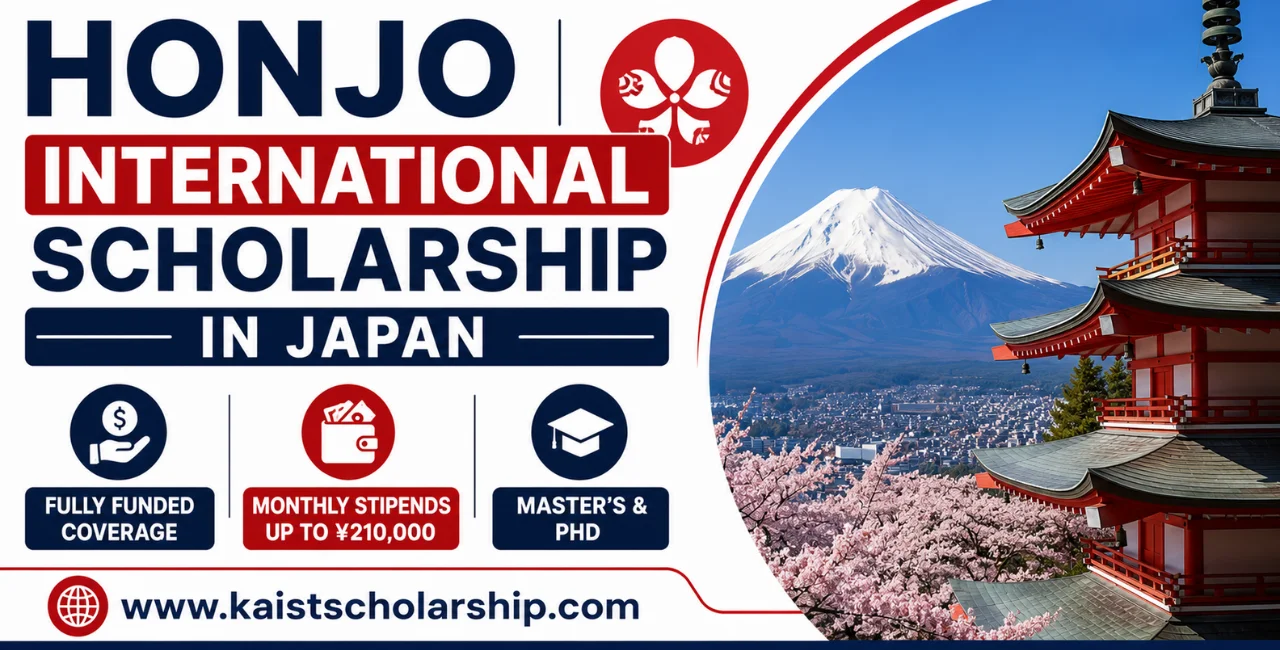
Japan Is Offering Monthly Stipends Up to ¥210,000 for International Graduate Students — Deadline October 2026
Japan doesn’t always come up first in conversations about graduate scholarships. Germany, the UK, the US — those get mentioned constantly. Japan sits quietly in the background while students overlook one of the most research-intensive academic environments in the world.
The Honjo International Scholarship Foundation is trying to change that.
Its flagship scholarship program supports international students pursuing Master’s and PhD degrees at Japanese universities — with monthly stipends, conference travel grants, and access to a global scholar network that extends well beyond the funding period. The Honjo Foundation Scholarship 2027 cohort is now open and the deadline to apply is October 31, 2026.
That’s closer than it sounds. Here’s everything worth knowing before you apply.
Honjo International Scholarship Overview
| Scholarship | Honjo International Scholarship Foundation |
| Host Country | Japan |
| Study Level | Master’s & PhD |
| Who Can Apply | International students (non-Japanese citizens) |
| Age Limit | 30 (Master’s) / 35 (PhD) |
| Application Deadline | October 31, 2026 |
| Language | Basic Japanese preferred (not required) |
What the Scholarship Pays — And Why the Tiers Matter
Most scholarship listings quote a single stipend figure. The Honjo Foundation works differently, and understanding the structure before you apply matters.
Monthly stipends are determined by the length of your graduate program:
- ¥210,000 per month — for 1 to 2-year programs (typically Master’s degrees)
- ¥190,000 per month — for 3-year programs
- ¥160,000 per month — for 4 to 5-year programs (typically longer doctoral tracks)
Beyond the monthly stipend, scholars receive travel grants for academic conferences — both within Japan and internationally. That’s a benefit most scholarship programs quietly omit, and one that matters considerably for researchers who need to present work, build networks, and stay visible in their field during their studies.
Scholars also gain access to an international community through seminars, cultural activities, and collaborative programs organized by the foundation — a network that stays active long after the funding period ends.
Who This Scholarship Is For
The eligibility framework is specific, and a few details here will disqualify applicants who don’t read carefully.
You are eligible if you:
- Are not a Japanese citizen
- Are enrolled in, or scheduled to enroll in, a graduate program at a Japanese university
- Are pursuing a program of at least one year in duration
- Are 30 years old or younger (Master’s applicants)
- Are 35 years old or younger (PhD applicants)
- Can demonstrate strong academic performance and genuine research potential
- Are committed to contributing to the development of your home country after graduation
- Support international friendship and cultural exchange
Professional graduate school applicants — those in programs not structured around traditional academic research — may also apply, but they must submit a detailed research plan as part of their application.
Two things that will disqualify you:
First, the age limits are firm. 30 for Master’s applicants, 35 for PhD applicants. If you’re above those thresholds at the time of application, this scholarship isn’t available to you regardless of your academic record.
Second — and this catches people off guard — you cannot hold another scholarship simultaneously. If you’re currently receiving funding from another foundation, government, or institution during the period you’d be supported by Honjo, you’re not eligible. Plan your funding timeline accordingly.
Basic Japanese language ability for daily communication is preferred. It isn’t listed as a hard requirement, but it’s worth being honest with yourself about — daily life in Japan, outside of major international research hubs, is considerably easier with functional Japanese.
The Video Requirement — Don’t Underestimate It
Every application includes a standard set of documents: transcripts, a research proposal, recommendation letters, a passport copy, and an acceptance letter from a Japanese university if you have one.
But there’s one requirement that separates Honjo’s application from most scholarship programs — and the one applicants most commonly underestimate.
A two-minute video presentation of your research plan.
Submitted in either English or Japanese, this video is your opportunity to demonstrate not just what your research is about, but how clearly you can communicate it. Two minutes is a very short window. You can’t read from notes and expect it to land well. You need to understand your own research well enough to explain it naturally, directly, and compellingly to a committee that will watch hundreds of these.
Start working on this early. Write a script. Record it multiple times. Cut it until it feels natural rather than rehearsed. Ask someone outside your field to watch it and tell you whether they understood what you’re trying to do and why it matters.
Most applicants treat the video as an afterthought. The ones who treat it as the centerpiece of their application tend to produce the submissions that stand out.
How to Apply for Honjo International Scholarship 2027
The process is fully online. Here’s the sequence:
- Visit the official Honjo International Scholarship Foundation website and review all eligibility requirements before starting your application.
- Prepare your supporting documents — transcripts, degree certificates, research proposal, recommendation letters, and passport copy. If you’ve already received an acceptance letter from a Japanese university, include that too.
- Record your two-minute research video in English or Japanese. Give yourself more time for this than you think you need.
- Complete the online application form and upload all required documents along with your video.
- Submit before October 31, 2026.
- Wait for selection results and further instructions from the foundation.
One practical note on the university acceptance letter: the application says “if available” which means you can apply before receiving formal admission. However, a letter demonstrating that a Japanese university is willing to accept you — even provisionally — strengthens your application considerably. If you haven’t started conversations with potential supervisors or institutions yet, begin now.
Related reading: